In late August 1929, Spanish poet Federico García Lorca left New York City to spend ten days with his friend and lover, Philip Cummings, at a lakeside cottage in northern Vermont. At the end of his stay with Philip, Federico traveled by train and taxi to the tiny hamlet of Bushnellsville, NY, one of twelve widely dispersed hamlets that together make up the Ulster County township of Shandaken in the Catskill Mountains. In 1930, the combined population of all twelve hamlets was 2,066.
Federico went to Bushnellsville at the invitation of his friend Ángel del Río, who had reserved a room for him at the same tourist boardinghouse where del Río was staying with his wife, Amelia, and their infant son Miguel Ángel. It’s unclear why del Río chose Bushnellsville for his family’s vacation, especially when other towns in the Catskills were well-known summer retreats for Spanish-speaking New Yorkers, but perhaps he and his wife were seeking greater privacy and quiet than those spots could offer.
Thanks to del Río’s written account of their time at the boardinghouse, plus a series of photographs taken in Bushnellsville, we know quite a bit about what happened there. However, the name, history, and exact location of the boardinghouse had never been established.
Happily, I was able to solve those particular mysteries in the course of researching Federico’s stay in Bushnellsville for the Catskills chapter of my book, Lorca in Vermont: The Spanish Poet and His American Lover. Bushnellsville was of particular interest to me because it was the first place Federico went after he left Vermont, when he was still coming to terms with his experiences there, and where he wrote several of the poems he later included in Poet in New York. The paragraphs below summarize my findings about the boardinghouse, its owners, its location, and Bushnellsville itself.
The Boardinghouse
I began my research in 2018 with a visit to the Town of Shandaken Historical Museum in Pine Hill, NY, where I had the good fortune to speak with the late Kathleen Myers, then director of the museum. When I asked Kathleen if the museum had any photos of former tourist boardinghouses in Bushnellsville, she initially said no, then remembered that one of her display cases contained a grainy photo of a Bushnellsville boardinghouse in a clipping from an unidentified newspaper. Though the photo was of very poor quality, I could see that some of the architectural features of the building appeared to match those of the boardinghouse visible in archival photos of Federico and the del Río family taken in Bushnellsville in September 1929.
Fortunately, the caption of the newspaper photo was clear enough to read: Rock Terrace House, C. W. Whitney, proprietor, Bushnellville [sic], N. Y. Once I knew the boardinghouse’s name and determined that the photo in the clipping was almost certainly a real-photo postcard, I began contacting collectors and vendors of historical postcards in the Shandaken area. After multiple referrals, I finally reached a private collector who had exactly what I was looking for: a pristine original copy of the postcard in the clipping. The collector graciously sent me a scan of that postcard, shown below.
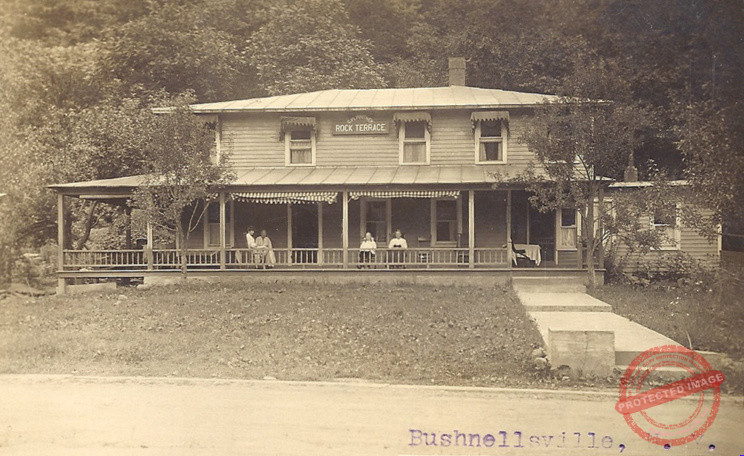
Figure 1. Rock Terrace House, Bushnellsville, NY, real photo postcard, ca. 1915, private collection.
When I compared the front porch of the postcard building to the part of the porch visible in the archival photos, it was clear that the archival photos had been taken on the front lawn of Rock Terrace House. More specifically, they were taken in front of the left end of the porch, easily recognized by its distinctive railing and foundation. The various doors and windows visible in each image also lined up perfectly, so that particular mystery was solved.
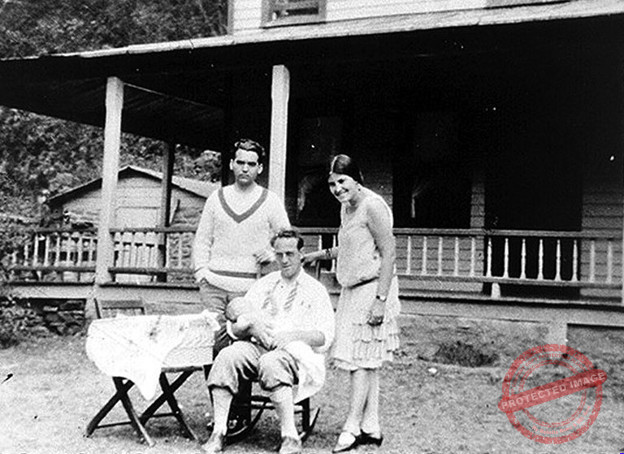
Figure 2. Federico with Ángel del Río, his wife Amelia, and their infant son Miguel Ángel in Bushnellsville, NY, September 1929. Archivo Fundación Federico García Lorca, Centro Federico García Lorca, Granada.
The Owners
In addition to giving the name of the boardinghouse, the newspaper clipping provided another important clue: the name of its proprietor, C. W. Whitney. Through a search of US census records on Ancestry.com (with some help from the land records discussed in the next section), I was able to determine the following family and ownership history.
In September 1929, Rock Terrace House was owned and operated by Roscoe and Phoebe Hogan, who were living there with their two children, Stanton and Helen. The boardinghouse was originally built by Phoebe’s parents, Charles W. and Helen Whitney, in 1911, during the height of the tourism boom in Bushnellsville. After Roscoe Hogan’s death in 1931, Phoebe remarried and eventually sold the property back to her mother, who sold it to new owners outside the family in 1938. However, I was unable to determine how long the building continued operating as a boardinghouse, or whether it still existed in some form.
The Location
Once I knew the name and ownership history of the boardinghouse, my next task was to figure out exactly where it had been. I began by searching for any mention of it in the historical newspapers accessible through Newspapers.com.
That search led me to a series of advertisements for Rock Terrace House that were published in the Brooklyn Daily Eagle between 1911 and 1929. According to one ad, guests who liked to fish could access the “best trout fishing in state in front of house.” I quickly determined that this was a reference to Bushnellsville Creek, a clear, cold brook still known for its “splendid trout fishing” that runs along present-day NY State Route 42 in the northern part of Bushnellsville.
That helped narrow down the likely location of the boardinghouse within Bushnellsville, but something still didn’t quite fit. And I eventually figured out why: though Rock Terrace House had a Bushnellsville address, it was not actually located in Bushnellsville, or even in Ulster County.
Instead, it was situated in an area on the northern edge of Bushnellsville that lies over the county line and technically within the boundaries of the town of Lexington, in Greene County—even though its only connection to the rest of Lexington is a steep, narrow road between two tall mountains. Adding to the confusion, the area is historically an outgrowth of Bushnellsville, and the people who live there think of themselves as Bushnellsville residents. The US Postal Service apparently agrees, as it includes the area within the same zip code region as Bushnellsville proper.
In the map below, the line separating Greene County from Ulster County is highlighted in red and the area where the property must have been located is highlighted in blue.
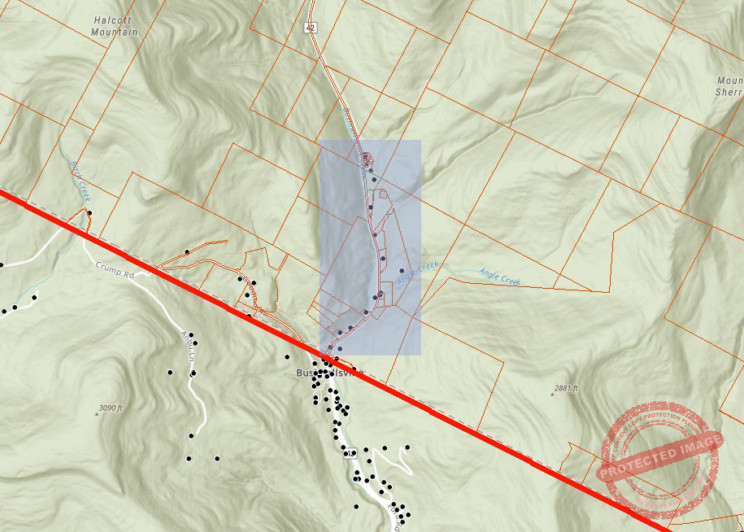
Figure 3. Lexington area of Bushnellsville, highlighted in blue, with Ulster/Greene county line highlighted in red. Greene Web Map, version 2.3.0.
The county distinction is critical because each county maintains its own property records in its own county offices. Once I realized that the boardinghouse must have been in Greene County, I could begin using Greene County’s records to try to trace the property’s ownership over time, from the Whitneys to the present owners, in the hope of nailing down its exact location. After a number of false starts and dead ends, I was able to determine with a high degree of certainty that Rock Terrace House was once situated somewhere on the property now identified as 1024 Route 42 in Lexington, NY.
Conclusion
In addition to the key facts about Federico’s stay in Bushnellsville described in this post, I learned many other interesting things about the Hogan family, their boardinghouse, and the surrounding area in the course of my research. For example, in 1975, scholar Daniel Eisenberg managed to locate and interview Stanton Hogan, then age 58, who was 12 years old at the time of Federico’s visit. Though Federico spent considerable time with Stanton and his sister at Rock Terrace House, and even borrowed Stanton’s name for one of the poems he wrote there, Stanton didn’t remember Federico. But he was happy to share his memories of the boardinghouse and its environs with Eisenberg, just as I look forward to sharing more of my Catskills findings in a future post.
Resources
Del Río, Ángel, “Introduction.” In Poet in New York, translated by Ben Belitt, ix-xxxix. Grove Press, 1955.
Eisenberg, Daniel. “Cuatro Pesquisas Lorquianas,” Thesaurus, vol. 30, no. 3 (1975), 520-538. https://cvc.cervantes.es/lengua/thesaurus/pdf/30/TH_30_003_128_0.pdf
Fernández, James D. and Luis Argeo, Spanish Immigrants in the United States, https://tracesofspainintheus.org/
García Lorca, Federico. “El niño Stanton” (Little Stanton). In Poet in New York, 3rd ed., edited by Christopher Maurer, translated by Greg Simon and Steven F. White, 89-91. Farrar, Straus and Giroux, 2013.
Greene County Property Record Online System, Greene Web Map, version 2.3.0, https://gis.gcgovny.com/greenewebmap/.
Perez Jimenez, Cristina, and J. Bret Maney, The Latinx Catskills, https://discover.latinocatskills.com/